Missing SLAs is expensive. Not just financially, but also in client trust, team morale, and the management time spent on damage control after the fact.
For most operations teams, SLA breaches aren't caused by a lack of effort. They're caused by a lack of visibility. By the time a manager knows a request is at risk, it's already late.
In 2026, the operations teams consistently hitting 95%+ SLA compliance aren't working harder than everyone else. They've built systems that surface risk before it becomes a breach — and act on it automatically.
Why Traditional SLA Tracking Fails
Most businesses track SLAs in one of two ways: a shared spreadsheet updated manually, or a basic timer inside a ticketing tool.
Both approaches share the same fundamental flaw: they're reactive. They tell you when an SLA has been breached. They don't tell you when one is about to be.
By the time a red flag appears on a dashboard, the window for intervention is often already closed. The client is waiting. The escalation is overdue. The damage is done.
Effective SLA management isn't about tracking deadlines. It's about predicting risk early enough to act.
The 4 Components of a Proper SLA Management System
A properly built SLA management system has four components working together:
1. SLA definition by request type
Different requests have different urgency levels. A critical support issue and a routine internal request shouldn't share the same SLA. The system needs to classify request type on arrival and apply the correct timer automatically.
2. Real-time SLA visibility
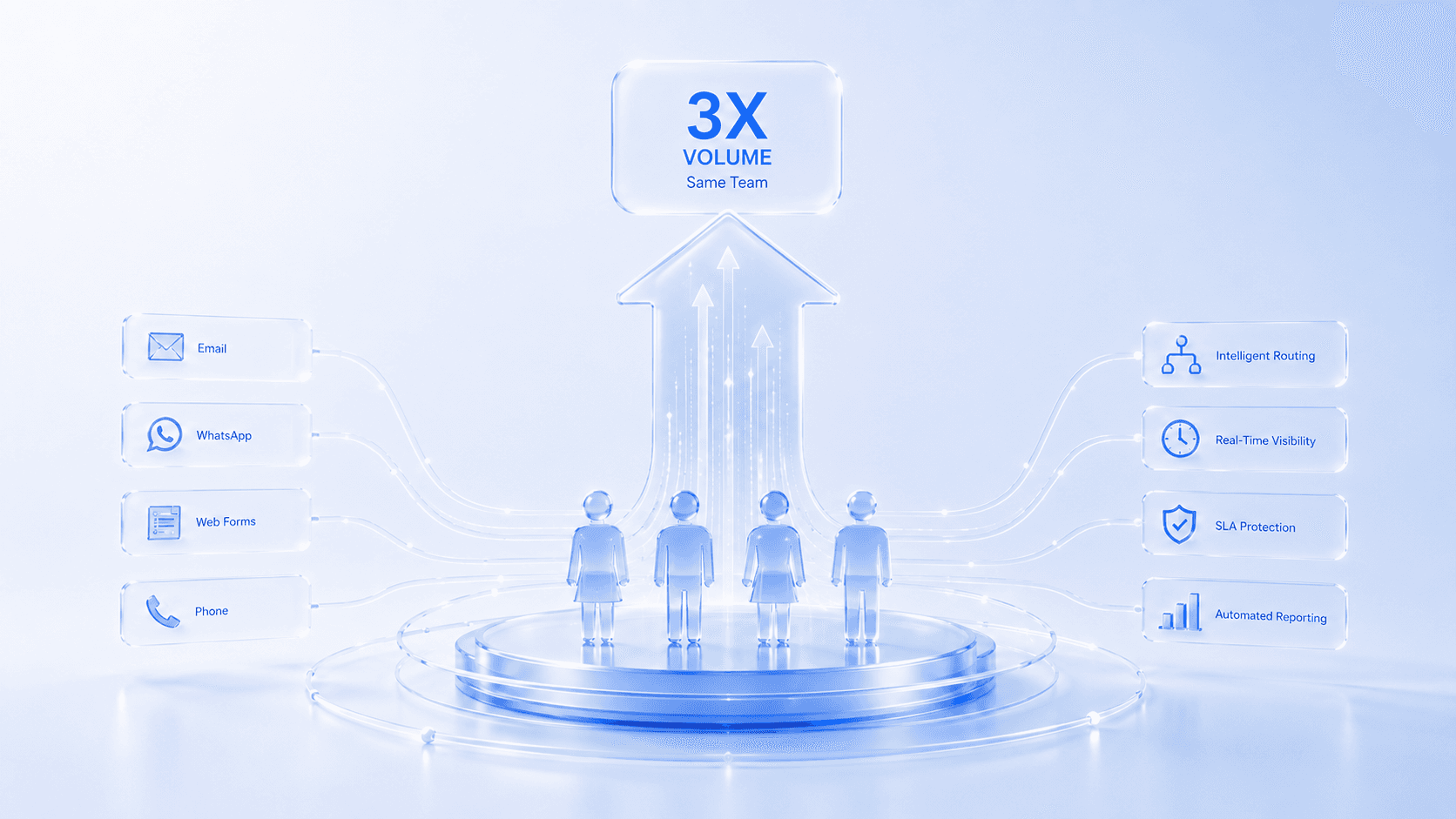
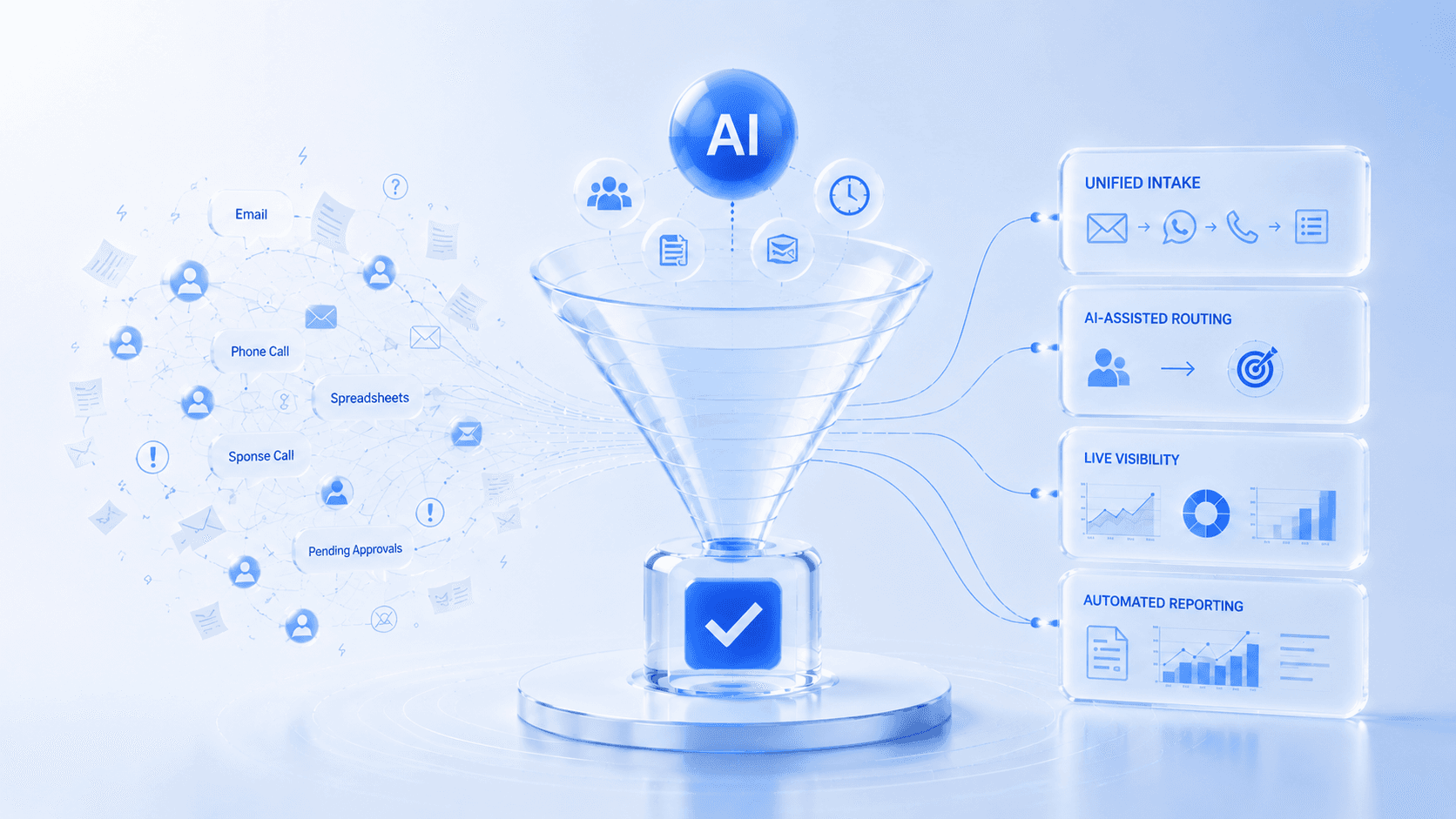
Every request in the system should show its SLA status — on track, at risk, or breached — visible to the right people without them having to check. A manager shouldn't need to pull a report to know where things stand.
3. Proactive risk alerting
When a request reaches a defined percentage of its SLA window without resolution, the system should alert the assigned team member and, at a higher threshold, escalate to their manager. Not after the breach — before it.
4. Post-breach analysis
When breaches do occur, the system should capture the data needed to understand why—assignment delay, resolution time, request complexity—so the underlying cause can be addressed.
How AI Changes SLA Management
Basic SLA tools apply fixed rules: if a ticket is open for X hours, send an alert.
AI-powered SLA management goes further. It looks at the request type, the assigned team member's current workload and historical resolution speed, and the complexity signals in the request, and calculates a dynamic breach probability.
A high-complexity request assigned to an already-overloaded team member three hours before SLA is a different risk profile than a simple request with six hours remaining and a free team member. A fixed-rule system treats them the same. An AI-powered system treats them appropriately.
This distinction is the difference between alert fatigue (where managers learn to ignore notifications because they fire too frequently on low-risk items) and genuinely actionable SLA intelligence.
What 95%+ SLA Compliance Actually Looks Like
One client-facing support team using GenRes's SLA Engine went from a 78% SLA compliance rate to 97% in 90 days after deployment.
The change wasn't in the team's capability or effort. It was when they received actionable information.
Previously, managers discovered SLA breaches after they happened, during daily check-in calls.
After: the system flagged at-risk tickets at 60% of the SLA window, escalated them to the manager at 80%, and auto-reassigned them if the assigned team member hadn't opened the ticket by 90%.
The team didn't work harder. The system worked smarter—surfacing the right information to the right person at the right time.
Building SLA Automation Into Your Operations
Before implementing SLA automation, you need three things defined:
1. SLA commitments by request type — different categories, different timers.
2. Escalation paths — who gets alerted at what threshold, and who makes the final call.
3. Assignment accountability — requests need clear ownership from arrival. An unassigned request has no SLA accountability.
Once these are defined, automation can enforce them reliably. Without them, automation just accelerates the confusion.
GenRes builds SLA management as a core component of every operational system — not a bolt-on. The Operational Audit phase defines the SLA framework before configuration begins, ensuring the system reflects your real service commitments.